Wednesday, February 5, 2020

What can we say August 9? 10th after Pentecost

   Genesis 37:1-4, 12-28 appeals to me, as the idea of preaching through the narrative of Joseph (Gen. 37-50) is something I want to do some day. The lectionary, though, skips immediately to chapter 45 next week and then plunges ahead into Exodus. Maybe a sermon can capture the flow of the larger story – without the sermon being a mere retelling of that story.

   And what a story! The drama, emotion, irony and vivid settings make this the Bible’s single greatest tale. The climax in chapter 45 (or is it in 50 after Jacob dies?) is stunning, undermining all our theological oversimplification. Joseph doesn’t let the brothers off, or give them another chance. He sees in how God, without causing evil, uses it for good – and the preacher dare not over-trivialize that thought either. Perilous but precious stuff.

   Just on chapter 37: Joseph, if we’re reading the Hebrew correctly, doesn’t get a “technicolor dreamcoat” (a la Andrew Lloyd Webber!) but rather a coat with long sleeves. Short sleeves were essential for day laborers in the fields, where it would be hot and brambles would get caught in longer sleeves. So Jacob is saying Joseph gets to live in the comfort and authority of the house, while the older brothers bear the sweat of hard work out of doors. As happens in the case of Cain and Abel, brother rages against brother, when brother’s real problem is with the Father (or God).


  Fascinating that, within a single family, we have class division. I wonder if, in my sermon, I might help people think about dashed dreams (especially during this coronavirus season?) - but not just for us but for the marginalized? I may have a soprano sing "I Dreamed a Dream" (from Les Miserables) - and try to ruminate on crushed dreams among us and others. I also noted, at John Lewis's funeral, that James Lawson quoted Langston Hughes's great dream poem: "I dream a world where man / No other man will scorn, where love will bless the earth / and peace its paths adorn / I dream a world where all / will know sweet freedom's way, where greed no longer saps the soul / nor avarice blights our day. A world I dream where black or white, whatever race you be, will share the bounties of the earth / and every man is free, where wretchedness will hang its head / and joy, like a pearl, attends the needs of all mankind / Of such I dream, my world!" It's not a stretch! Joseph's dream, at the end of the day, was about securing enough for everybody, food for the entire world.

   Jonathan Sacks notices how Reuben fairly quickly tries to intervene, but fails – calling him “the Hamlet of Genesis,” someone with good intentions he never completes, or they backfire; at the critical moment, he never comes through.

   We have little hints in this opening scene of the story of how God superintends things. God is, as Sacks puts it, “already monitoring the sequence of events, arranging the necessary strategic interventions to ensure that the outcome will be as planned.” All this is concealed, not obvious at all – and so I wonder how the preacher opens up to listeners the idea that we are sort of “co-authors of our lives,” free to act, yet with God’s involvement, a far cry from the silly “God is in control” mantra people love.

   I love it that the Bible seems utterly lacking in sweet, happy families. So much dysfunction – helpful to me, as a guy from an utterly dysfunctional family. Tolstoy’s opening to Anna Karenina is poignant: “Happy families are all alike; every unhappy family is unhappy in its own way.” It’s a bit tongue in check. Every family has its unhappiness. A pastoral challenge is to help people not to glibly say such saccharine things about family. During the Covid-19 crisis, how many people said “Oh, how cool to get more time with family!” – in earshot of the woman whose belittling husband now stays home instead of giving her the respite of leaving for work, or the divorcee who felt her loneliness more agonizingly. Don’t do this in preaching, ever! – and help people to learn how to talk with one another about family. Bible families oddly enough show us the way.

   Romans 10:5-15. Like Genesis 37… unless you’re preaching your way through Romans 9-11, which would be daunting (is it more of a class?), perhaps best to avoid this text. Verse 9 gets isolated: “If you just confess with your lips that Jesus is Lord and believe in your heart that God raised him from the dead, you will be saved,” as if that’s a formula for a revival. Paul is leaning in to his Jewish relatives and friends who just don’t buy into Jesus. Complicates things – and then do we really want to name that anyone who utters “Jesus is Lord,” and intellectually accepts that Jesus was raised are saved? – and that’s it?

   What about the woman I counseled with who swore to me she’d never believe in Jesus because her daddy, who most certainly did as a Bible teacher and deacon in his church, sexually abused her through her teenage years? He’s saved and she isn’t? Or those who have only heard about Jesus from boring, vapid, judgmental people? They’re not saved but the dullards are? I don’t think it’s a problem to ask such questions in the pulpit. No need to answer them. Just let them linger.

   And then take off your shoes: “How beautiful are the feet of those who bring good news!” My surgically repaired foot is ugly as sin. Of course, Paul is seeing the beauty in the proclaimer, who’s been sent, actually going, walking, getting to the people to share.

   Matthew 14:22-33 is, for me, one tough text. The setting is alluring. If you’ve been to Israel, you totally get “the other side.” When you’re by Galilee, you look across and – there it is, the other side. Jesus went up on a mountain by himself to pray: exemplary for us, a flawless sample of the way being solo need not be loneliness, but solitude. The sensational archaeological discovery of “the Jesus boat,” a real fishing boat dating to the time of Jesus, a boat he most assuredly saw and maybe stepped into, helps me feel my way into the reality of first century life on Galilee.

   But then Jesus had to go and walk on the water. And Peter did too, acting very Bruce Almighty-like – briefly though. Peter, whose name means “rock,” sank like a stone. As we would expect. And Jesus fusses at him! Seems like he should give him credit for taking even a few steps – on water.

   There’s a Buddhist story of a disciple who walked on water, or sank depending on whether he focused on the Buddha. Easy story to spiritualize. We can even sing “Precious Lord, take my hand.” But I’m probably not the only guy in the room who will just shrug and say Gosh, not sure this really happened. The Gospel writers had to know skeptics as well. Maybe one or two were themselves skeptics. But they let the story stand – maybe to throw cold water on skeptics like me and invite me to suspend me for a few minutes and tread onto such a story that, if it happened or not, most clearly is about faith, and really about how utterly amazing and God-like Jesus really was and is.

***
  My newest book is my favorite (among 20 I've written now!) , fun to have researched, to have written, and to find in print. I hope you might enjoy it - part of the Pastoring for Life: Theological Wisdom for Minstering Well series from Baker: Birth: The Mystery of Being Born. Check it out - and thanks in advance for doing so!

Tuesday, February 4, 2020

What can we say August 2? 9th after Pentecost

   Personal curiosity: I'll be "back" preaching this Sunday after being out for my father's death. So in general, after such a loss, but especially this time because many saw my "Complicated, Infrequent, Maddening" blog about his life and death... Do I talk about it? Or just do Sunday?

   Genesis 32:22-31. Can we read a text from the perspective of a hymn? Charles Wesley, before composing “Come, O Thou Traveller Unknown,” must have spent a lot of time ruminating on this story. Estranged from his brother for decades, with a troubled marriage, Jacob is alone, anxious, on the run, evidently thrashing up against the limits of existence.

   He can’t even get a good night’s sleep. Terror of all terrors, he’s tackled by… well, it’s too dark to see. A robber? Is it Esau? An angel? God? The ambiguity is the reality for Jacob – although the implication is that God is somehow, mysteriously in the thick of this life-threatening assault. Wesley’s surprising insight is that he imagines Jacob actually inviting the perilous encounter: “Come, O thou traveler.” Come. Bring it on. Jacob never shrank from trouble, and instigated plenty of it on his own. He’s a fighter, someone who weirdly enjoys conflict. The Bible portrays a God who enjoys it as well. What an odd religion Israel and then Christianity have: we argue with God; we can do combat with the Almighty. God allows this. God welcomes this. God seems to want a relentless, ferocious openness, honesty and grappling from us.

   I may open my sermon by telling about the Father's Day night I came home alone to a dark house. Everyone in my family had to be somewhere. I was feeling a touch sorry for myself. Unlocked the door, and before I could turn on the light, I was grabbed by a screaming man who wrestled me down. Terrified, it was only when he laughed that I knew it was Love that had attacked me in the dark. It was my son, who'd parked down the street and was determined to surprise me. Was I ever...

   I wonder what sudden assaults we undergo. There is actual assault, of course... but then, the Pandemic? A sudden, unanticipated, unsought encounter with truth? What about news, like "it's malignant," or "your dad died"? - and you are face to face with horror, hope, death, life... God. Perhaps here I will bring in the subject of the loss of my dad. Moments in history: George Floyd's death said Now is finally the time to deal with it. Harvey Weinstein's ugly story said Now is finally the time to deal with it. Jesus, after all, was above everything else so very urgent in saying Now. Decide Now. Follow now.

   There may be something in here about how we think about strangers. A “traveler unknown” arrives in Jacob’s camp. Who are the strange travelers in our world? Rabbi Jonathan Sacks reads Genesis and Exodus as if God is telling the truth about the stranger to each one of us: “If you are human, so is he. If he is less than human, so are you. You must fight the hatred in your heart as I once fought the greatest ruler and the strongest empire in the ancient world on your behalf. I made you into the world’s archetypal strangers so that you would fight for the rights of strangers… Though they are not in your image, says God, they are nonetheless in Mine. There is only one reply strong enough to answer the question: Why should I not hate the stranger? Because the stranger is me.” Indeed, Wesley’s hymn presses the traveler: “Tell me if thy name is Love.” God is in the stranger. Love is in the surprise encounter in the dark. God is with Jacob – by being against him, by wrestling with him.

   Jacob doesn’t try to escape. The hymn grasps this: “With thee all night I mean to stay and wrestle till the break of day.” Does Wesley’s hymn help us see this, which might be implied in Genesis 32? Jacob has chutzpah, a cockiness that dares to fight anybody, God included. And he fights even God to something of a tie! And he isn’t merely a survivor. As always, he’s getting something to take home: “I won’t let you go unless you bless me.” He had stolen the blessing from his brother – and now he insists on blessing again. Is it a model for prayer: we grapple with God, then we grab hold of God and won’t let go until we get the blessing?

   Just as the sun begins to rise, Jacob limps away from the scene. He is wounded, marked by the encounter. There are pains that come from our battles with life and God. Sacks speaks of “honorable scars.” In Graham Greene’s novel, The End of the Affair, a woman notices what used to be a wound on her lover’s shoulder, and contemplates the advancing wrinkles in his face: “I thought of lines life had put on his face, as personal as a line of writing – I thought of a scar on his shoulder that wouldn’t have been there if once he hadn’t tried to protect another man from a falling wall.  The scar was part of his character, and I knew I wanted that scar to exist through all eternity." Jesus' scars persisted, and they still do. Jacob is scarred; he limps, his wound the badge of honor from having engaged mightily with the Almighty.

   Jesus, we might recall, had scars after Easter, scars he earned when he gave life to all of us, not blotted out by the resurrection (John 20:27). Frederick Buechner envisioned this when he preached on Jacob limping away from his contest with God: “Remember Jesus of Nazareth, staggering on broken feet out of the tomb toward the Resurrection, bearing on his body the proud insignia of the defeat which is victory, the magnificent defeat of the human soul at the hands of God.” Genesis 32 isn’t about Jesus. Or to the eyes of faith, is it? Wesley’s hymn imagines an inquiry into the name of this nocturnal stranger, guessing that it’s Love – with a capital L – and finally, and delightfully concluding, “Tis Love! Thou diedst for me.”

   Romans 9:1-5. Paul maybe doth protest too much: “I am not lying!” So defensive! And yet so effusive in his adulation of Israel. Anti-semites never read Romans 9: “To them belong the adoption, the glory, the covenants, the law, the worship, the promises, the patriarchs.” Exactly. We Christians would always do well to reflect with endless gratitude and joyful solidarity with our Jewish neighbors.

   Matthew 14:13-21. Jesus’ habit – that he “withdrew to a deserted place” – is exemplary. As is, though, his “interruptibility.” This is the ministerial life, and also the ideal life of the laity, as we zigzag between the discipline of time alone with God and then being willing to be interrupted to respond to a person needing mercy. Jesus’ “compassion”: the Greek, esplangnisthe, is so evocative, meaning an inward turmoil, a twisting of the guts. Jesus really feels what he feels for the people. He’s not ordering them around or judging them; his entrails get all contorted, like a woman’s womb in labor.

   Hard not to admire his reply to the disciples informing him of the obvious – that the crowd is hungry: “You give them something to eat.” Emphasis on the you. The 5 loaves and 2 fishes were commemorated in an unforgettable mosaic in the little church on the shore of Galilee. My questions, raised in a sermon I preached on this text in Duke Chapel a few summers back (which I’d commend to you as the best I have to offer), are Wouldn’t a better miracle have been to have produced just enough for the crowd instead of all the leftovers? What did they do with the leftovers? Worship the bread (in Catholic style)? Distribute it to the poor? Why the waste? Or is it a story that shows God’s lavishness, that God really does give us more than enough – what Sam Wells calls a “superabundance”?

   At Duke I told about Dorothy Day giving away a big diamond ring to a poor person. Who says it should be sold and distributed according to the world’s calculus? Maybe God wants fabulous things for the poor as well. I’d encourage the preacher to think of moments of God’s superabundance. I told about an ordination I preached in Haiti. We had a lovely service planned, a nice dinner, and appropriate gifts for the ordinand. But we got the idea of loading extra suitcases full of Oreos for the kids (and grownup kids). It was a giddy feast, unexpected, yes a bit wasteful – but God’s like that, right?

***
  My newest book is my favorite (among 20 I've written now!), fun to have researched, to have written, and to find in print. I hope you might enjoy it - part of the Pastoring for Life: Theological Wisdom for Minstering Well series from Baker: Birth: The Mystery of Being Born. Check it out - and thanks in advance for doing so!

What can we say July 26? 8th after Pentecost


   On a dare, I preached on Genesis 29:15-28 last go round – and surprised myself by how well it went. “In the morning, behold, it was Leah!” It’s all about how disappointment works – in marriage, friendship, life, with the church, yourself, God even. Jonathan Sacks notices how Jacob’s trickery earlier in the story boomeranged on him; the medieval rabbis imagined Jacob chiding Leah: “Why did you deceive me, daughter of a deceiver? Didn’t I call out Rachel in the night, and you answered me!” He blunt reply? “Isn’t this how your father cried out Esau, and you answered him?” There’s also the rich irony of Laban’s assertion that “this is not done in our country,” giving the younger before the firstborn – which is exactly how it does wind up happening in the strange world of the Bible.

   Romans 8:26-39 is one of the most pastoral, and personally moving texts in all of Scripture. Again, I imagine Paul pacing the room, blurting out his latest thoughts, the scribe scrambling to get it down on parchment, thinking “Wow, this guy is on fire today!” So much here: “We do not know how to pray as we ought,” which is an understatement. So often parishoners in crisis say they don’t know what to pray, or feel they can’t pray. I ask if they’ve done any sighing. Of course they have – and we note how Paul dares to suggest that our “sighs too deep for words” are really the Spirit praying in us. Wow – so encouraging for me as a pastor, and as a guy who sighs a lot. Preaching this requires no illustration, except the shared bonds of humanity.

   Verse 28 is one of those verses people love to cite, thinking it means that God is orchestrating everything in your life so you have a happy ending and all goes swimmingly well. But those who quote this aren’t attentive to context. It’s not that God causes everything to work together for my enjoyment. The panta, “all things,” pretty clearly refers to the sufferings of the present time (verse 18). And sunergein, “works together,” more likely connotes “assists,” or “are profitable.” John Calvin explains: “Paul does not mean that all things serve the comfort or convenience or worldly interests of believers; it is obvious that they do not. What he means is that they ‘assist our salvation.’” It’s about the assurance of a future with God, and how present sufferings can’t unravel that relationship with God and with others in the Body of Christ. Scripture does of course have the Genesis 45 and 50 belief – that God uses evil for good. But this is a far cry from God using little circumstances and happenings to make my life fun.

   Matthew 13:31-33, 44-52. In v. 51 Jesus asks, “Have you understood all this?” They answer, “Yes” – but I’m a little puzzled. I’m not sure Jesus’ stories are really supposed to be translatable into some logical proposition. He told stories with vivid images because that was the way he wanted to communicate what he had to say. The vivid image is his message. It’s all mind-boggling. A tee-tiny mustard seed burgeons into a big shrub which can accommodate birds. Treasure hidden: how often do you find such a thing? What’s the nuance? The joy? The finding? That it’s hidden? That it’s precious? That sacrifice is required? The answer is Yes – and more. Pearls, and then the pearl; I love it that the Greek word for pearl is margarita – although I may not share that.

   If I make a connection for people, it might be revisiting the ending of the film Good Will Hunting. On the advice of his therapist, Will drops his new job and his settled life and drives off to find the girl. He’s full of joy and hope – but even those he abandons are filled with joy that he’s gone.

   And then Rick Lischer, in his great book on the parables, passes along a quirky reading of the hidden treasure from a sermon he stumbled upon: 
“‘When Jesus was taken from the cross, they hid his body in a tomb and then sealed it lest someone find him. For 3 days, Jesus himself was the Treasure hidden in the field; for 3 days he was the seed lying dormant in the ground. He was a human parable of God’s love and power.’ It is fair to say that neither Jesus nor the author of Matthew’s Gospel intended that to be the meaning of the parable. Nevertheless, the preacher, not schooled in the church’s rich tradition of theological interpretation, has managed to speak in perfect continuity with the tradition and declare something ‘new.’”

***
  My newest book is my favorite (among 20 I've written now!) , fun to have researched, to have written, and to find in print. I hope you might enjoy it - part of the Pastoring for Life: Theological Wisdom for Minstering Well series from Baker: Birth: The Mystery of Being Born. Check it out - and thanks in advance for doing so!


Monday, February 3, 2020

What can we say July 19? 7th after Pentecost


   Three great passages; some thoughts on each one. Genesis 28:10-19a (which echoes the Psalm, 139, in intriguing ways, as Jacob is learning the answer to “Where can I flee from your spirit?”). It’s hard to ponder this text without hearing “We are climbing Jacob’s ladder.” Even reading: you pause after “are,” and after “climbing,” as if you grasp a rung and pull, then pause before the next rung. “Every rung climbs higher, higher.” Singing it requires some patience. The pace is slow but certain. No wonder slaves on plantations, dreaming of going up and over and outta there, loved this song.

   Thomas Merton shrewdly suggested that you can spend your life climbing that ladder society directs us to climb. But then you get to the top, and you realize it’s leaning against the wrong wall. Jacob had been a ladder-climber, doing whatever it took to get ahead, cheating his brother, deceiving his father, whatever. But in Genesis 28, as he comes to “a certain place,” no place really. He’s exhausted. Must rest. In a fitful sleep he has a dream, one Freud might analyze, a vision, one we might covet. A ladder bridging the great chasm between earth and heaven. The Hebrew really means it’s a long, steep ramp, the kind archaeologists have uncovered on the sides of those tall Tower-of-Babel-like ziggurats in Iraq.

   Angels, not the sweet ones we know from little statues, but mighty heavenly warriors and messengers, going up and down, down and up on the ramp. What could it mean? Jacob snaps out of his sleep or reverie, and dumbfounded can say nothing but “The Lord was in this place and I did not know it.” I wrote an entire book of recollections from my childhood, youth and adulthood of times and places God was there, but at the time I did not know it (Struck From Behind); only in retrospect could I say Aha! God was in that moment, that person, that circumstance.

   God was there but I not only didn’t know it. I wasn’t seeking it. I wasn’t praying. Jacob isn’t on some spiritual quest. He’s on the run from – his brother? His parents? His past? His demons? “We are climbing Jacob’s ladder”? We’re groping in the dark for we don’t know what. And it turns out to be the way to God – or God’s way to us. Jacob, after all, doesn’t seem to even try to climb the ladder. He’s awestruck, he makes a vow, and then goes on his way to a new job, a couple of wives, children who squabble, and a lot of heartbreak. God was in those places, too, he now understood. Jacob was “a border crosser, a man of liminal experiences” (Robert Alter).

   I am thinking this Sunday we might "broadcast" from my home - to suggest ways Jesus is there without us knowing it. We are having Holy Communion - again from my home, pondering if Jesus is there in all our meals, not just the official Eucharistic meal. The coronavirus situation might enable me to illustrate this to my people in a way I could not if we were stuck in the church building. At least, I hope so....

   Jesus mysteriously told Nathaniel, “You will see the heaven opened, and the angels of God ascending and descending on the Son of Man” (John 1:51). St. Catherine of Siena thought of Jesus’ cross as a wooden ladder to heaven, and of his crucified body as that ladder on which we climb toward God.

   Who’s doing this climbing? “Soldiers of the cross.” Of course, the old spiritual was thinking one way. But maybe we can jump to the soldiers at the cross, the ones who nailed Jesus to it, the ones snickering, the ones gambling over his clothing. And the ones he forgave, although they didn’t repent or ask for any mercy. Pondering this, the way God showed up to Jacob in his anxious flight from God and goodness, and the way Jesus our ladder to heaven forgave unrepentant soldiers of the cross, we know the only answer to the hymn’s other questions: “Sinner, do you love my Jesus?” and “If you love him, why not serve him?”

   Romans 8:12-25, so rich, inviting us to cry Abba! – and in our moaning it’s the Spirit groaning, praying within us. And we are one with the whole world in our agony – which to the eyes of faith aren’t terrors but labor pangs. Notice we become heirs with Christ, not “if we suffer with him” but “provided we suffer with him.” Oh my. I’d prefer Paul have written something more soothing.

   Matthew 13:24-30, 36-43. Images are our only chance to help people imagine a diverse, divided church staying together. I was vacationing in Scotland and lucked into a conversation at a pub with a shepherd. Like a professional. One question I asked was Why do you never see just sheep, or just goats, but always both? He replied, We’ve found over the centuries that they just do better together.

   Jesus found a vivid image: wheat and tares, growing together. The question in Jesus’ simple, unexplained parable isn’t Am I wheat? Or tares? You’re both, of course… But this story is about the community, the people of God. The Church is wheat, and tares, both, and we like to think we know who’s who, as if you could simply put a sticker on each person’s nametag so we could accurately identify who’s who. And we’ve got to do something about those danged tares. 

   Robert Farrar Capon points out, "This is no way to run a farm. Maybe Jesus was just not as good a gardener as he was a carpenter... Programs designed to get rid of evil are doomed to do exactly what the farmer suggests they will do. Since good and evil commonly inhabit not only the same field but even the same individual human beings, the only result of a dedicated campaign to get rid of evil will be the abolition of literally everybody." He suggests that the devil's best strategy is to sucker good people into taking up arms against one another, while he sits back and laughs.

   Churches divide – grieving Jesus’ heart, who prayed for unity on the last night of his life (John 17), and still does. I’d commend my blog on why unity is required of us as United Methodists; all churches tend to want to separate wheat and tares, which Jesus said we keep them together. 
  Francis Schaeffer, the godfather of evangelicalism, wrote about the way we fail to love within the church: Christians “rush in, being very, very pleased to find other men’s mistakes. We build ourselves up by tearing other men down.” We are to exercise love in even the toughest situations – the obligation of “loving our brothers when it costs us something, loving them even under times of tremendous emotional tension, loving them in a way the world can see.”

   I love this scene in Stephen Bransford's novel, Riders of the Long Road. Silas Will, a circuit rider back in the 18th century, was grilled with hard questions by a young man about God, evil and suffering. His response? 

   "'God sees much more than we see. He sees the beginning and the end of things and He is doing what is best from all that He sees. God would never kill a child. But there is an invisible war that goes on around us while we live here on earth. God promised to destroy the Devil.' The young man asked, 'Why won't God finish it now?' Silas was thoughts for a moment, and then suddenly leaped up, bent over with excitement. 'They asked Christ the same question.  Look here, watch down here.' He bent over. 'Christ said the Kingdom is like a sower who sowed good seed, but in the night his enemy came and sowed weeds among the wheat. See, here are the good grasses' - his hands stroked the grass - 'and this pennyroyal here is like the weed.' One hand closed upon a large mint-leaves pennyroyal stem. 'Look at it, and look what happens when I pull it out.'  Silas yanked the pennyroyal up by the roots. It exploded from the ground, showering both of them with dirt from its spreading roots. 'This is what Christ said. The people urged Him to pluck all the weeds from the wheat field, but He said, no, let them grow together because to pull them out now will destroy much innocent wheat. See the grasses that have died here because I pulled up the pennyroyal? We know pennyroyal roots grow under ground, tangled beneath the other grasses. God knows the roots of evil grown around every sickness since Adam and Eve. Yes, God can purge the world of sin and death right now, but He doesn't because all have sinned and we are all so tangled with the corruption of sin that He would destroy us and the whole world in that selfsame moment. What kind of God could do that?'"
***
  My newest book, Birth: The Mystery of Being Born (in the Pastoring for Life: Theological Wisdom for Ministering Well series) is out - and I'm excited about it. My favorite book among the many I've written. Enjoy!

Sunday, February 2, 2020

What can we say July 12? 6th after Pentecost


   Midsummer preaching is … challenging? fun? different? I enjoy fiddling around with Old Testament stories, not to make moral points but to open people’s minds to the world of the Bible. Genesis 25:19-34 is one fascinating text, inviting us into Rebekah’s womb where twins are kicking around, making her uncomfortable. A predictive kind of discomfort too: did she realize in retrospect, once Esau and Jacob were grown and engaged in intense sibling rivalry, that their combativeness began in her own belly?

   Henri Nouwen, in Our Greatest Gift, tells a charming story about an argument fraternal twins have in their mother’s womb. Check it out here. Profound, memorable, theologically suggestive: preachers should know and use it! – although unsure if it's Yes or No while dealing with Jacob and Esau… I may tell it, not as my main point, but as an aside, realizing the way an aside might be the bit of the sermon God actually uses...

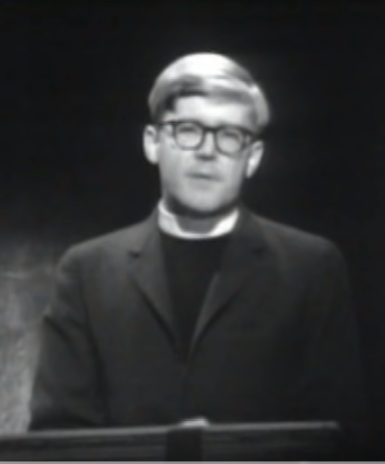
   These twins could not be more unidentical. Esau, hairy, an outdoorsman, is as stereotypically male as you could be. Jacob, smooth, preferring the house, a mama’s boy. The famous Alan Bennett “On the Fringe” comedy routine pokes fun at the text – and I suspect the storytellers who passed all this along before it landed in Genesis, and throughout history, there’s a chuckle in here somewhere. Maybe at Jacob’s expense. I wonder if a sermon would dare to name gender stereotypes and how they lead to misperception and trouble.

   I wonder, given where we are in 2020, if these unidentical, combative twins might mirror race, or political ideology in our country - or traditionalists and progressives in United Methodism. Black and white, Progressives and Conservatives, clearly kin... and yet so different, so implacable, so ill-equipped to get along. Yet Jesus' prayer at the Last Supper was that we would be One. It wasn't a command, but a prayer - and the enabling of oneness was to come the next day in his crucifixion, and in the sending of that Spirit he promised right before he prayed. Esau and Jacob are at odds for years - but at the end of the story, even these two reconcile. 

   I'm drawn to speak of race - noting our genetic closeness (blacks and white virtually as identical as twins...), yet our sibling rivalry type division - perhaps explained in a fascinating way by Lloyd King, a man Studs Terkel interviewed for his book Race. King said our problem isn't that we hate each other. Rather it's that we love each other. Like a marriage that got off to a rocky start, we think we might prefer separate lives so we don't kill each other. But we really do love each other.


   Alternatively, I'm tempted to psychologize - the idea that we have very different twins inside, who duke it out. Maybe the race work depends on inner work, finding that "hairy one" as depicted in Robert Bly's fabulous Iron John. A hunter shows up at a castle one day and asks "Anything dangerous to do around here?" The king says "Well, there's the forest over there, but no one returns." Hunter says "That's the kind of thing I enjoy." He plunges into the forest with his dog. They come upon a pond. A big hairy arm reaches up and pulls the dog under the water. The hunter says "This must be the place." He finds a bucket, starts bailing the water out until there's a big guy covered with red hair. Iron John. A parable for doing bucket work in the soul.

   A moralist would fault Esau for thinking short-term desire, thus squandering his long-term destiny. Brueggemann reaches a bit in this direction: “The contrast is between deferred and immediately material blessing. Esau cannot wait. Jacob is the figure of trusting Israel, able to wait.” But that’s hardly what the text is about. It’s not a moral at all. It’s telling what Israel’s ancestors were like: robust, edgy, alluring, memorable, fitting ancestors. The theological thrust is that it’s the younger one, it’s the less muscular one who carries God’s blessing. It’s also the conniving, grasping one… God’s ways are so strange, not at all about human merit – and yet God’s people can be so very clever, even to their own undoing.

   Russ Reno (noting this text’s usage in Romans 9-11): “Only God’s wanton disregard for our moral and spiritual worthiness makes fellowship with him possible. That God tosses reasons aside does not signal that he does not care, but instead indicates a love that tosses aside the fact that the beloved does not deserve to be loved.” I love that he adds that “the standard spiritual mistrust of the doctrine of predestination stems from a latent spiritual pride that encourages us to survey the divine pan from above and coolly judge its merits.”

   Hard not to float onward in the story to the intense heartbreak to come, at first for Esau and Isaac, but then inevitably for Jacob as well. They come to make peace with one another, but only after years of conflict worse than that in the womb. They do reconcile. It is possible.

   Romans 8:1-11 is well worth preaching if only to underline the truth the vast majority of clergy and other Christians have missed for centuries: “There is no condemnation in Christ Jesus.” The Church has dished out an endless spewing of condemnation, and we’ve harbored a lot of condemnation in our own heads, or in gossip. Worst of all, we turn our condemnation skills on ourselves. But whole point of the incarnation, crucifixion and resurrection is that now, “Therefore, there is no condemnation in Christ Jesus.” We are no good at it, it’s not our job, it eats us alive and ruins everything – and is not the obligatory responsibility Christians assume is on their shoulders. I might make my whole sermon just this, maybe with some examples of how condemnation has been stupid, cruel, and the worst conceivable witness to the goodness that is Jesus. When Paul speaks of our minds being “on the flesh” in this text, we need go no further than our proneness to condemnation.

   I love preaching on Matthew 13:1-9, 18-23, Jesus’ parable of the sower. Every few years, when this text appears, I get a bag of seeds and fling them around the sanctuary as I’m preaching (you can watch one example here!). My history with this text goes back to a summer internship I did during seminary. The pastor, Marion Crooks, began his sermon by singing “What Kind of Soil Am I?” (to the tune of “What Kind of Fool Am I?”). He asked Am I thorny, a barren road, or fertile soil for God’s Word? Great sermon. But years later I read lots of commentaries on the parables, and they all were obsessed with the weirdness of this sower – which must have been Jesus’ point. What kind of sower is this? I might sing. Willing to waste seed, not frugal, downright profligate – like grace.

   In my sermon last time, I spoke of my first rural appointment where I attempted a vegetable garden. I measured seed, bought just enough, planted so very carefully – and as unlike Jesus’ sower as possible. The surprise came when my carefully planted squash was mediocre – but then I had what country folk call “volunteer squash.” I must have spilled some seed in an unplowed area just outside my garden – and that was the fabulously productive squash. Why? There’s power in that seed. There’s power in the Gospel. You never know where it’ll spring up.

   I make this a parable about church life. We are so careful. We measure predicted results. We don’t risk much. Then Jesus lures us to be like this sower, flinging it around everywhere, trying any and everything. So what if stuff doesn’t work? It’s always been that way. But then you get volunteer squash people where you least expect it. And you’ve embodied as a church what the grace which founded the church is like, not measured, or plunked on the likely ones, but strewn all over the place.

   How lovely of Jesus, by the way, to be preaching and find his illustrative material in a day laborer working in a field behind him. Millet's painting (above) captures the peculiar beauty of such everyday labor. Van Gogh did his own cover of the Millet. He'd started into the ministry before becoming a brilliant painter; he wrote that "I have sometimes had a lesson from a German reaper that was of more use to me than one in Greek." The simple observation of labor, so lovely, inherently godly, worth noting with no moral in a sermon. 

   I’d add that scholars generally regard Jesus’ explanations of his parables as later interpolations. They usually are pretty lame, like explaining a joke, or taking the rough edges off a bawdy story. In the case of the sower though, the interpretation isn’t so bad, especially part 3, where it is “the cares of the world and the love for money that choke the word.” Indeed. Back to What kind of soil am I? or maybe rather, What kind of world is this where the Word of the crazy, generous Sower is always being swept aside?
***
  Thinking of children in the womb... my newest book, and my favorite ever, is Birth: The Mystery of Being Born (in the Pastoring for Life: Theological Wisdom for Ministering Well series) might be of help to you and others.


Saturday, February 1, 2020

What can we say July 5? 5th after Pentecost

  The challenge of preaching ramps up even more. As if coronavirus, racial tension, a mess of a denomination, and now statues and flags (which I blogged about in Jesus on Statues, Flags and Monuments, hopefully from a sound theological perspective) isn't enough, add on the edge July 4 brings in people's hearts. If you are doing ministry these days - Thank you. Know that at least I know how grindingly hard this is!


   The Sunday the day after July 4. I’m sorry, but I will grouse openly about the fact that, on the day people chatter about soldiers giving their lives for our religious freedom, people exercise that freedom by attending church in absurdly low numbers; I'd anticipate this will hold true during the coronavirus online services.  I blogged a few years back about “Jesus and July 4 (one of my best and most popular blogs ever!) and I’ll stick by its premises all day, every year. God sets us free – to have parades and drink beer and shoot off fireworks? Or to be holy, charitable, compassionate?

   I do suspect that it’s wise, as we build that invaluable personal capital with our people, on the Sunday near July 4 to say cheerful, appreciative things about the day, things that are theologically hopeful.  The late-in-life correspondence and reconciliation between John Adams and Thomas Jefferson is especially alluring – and then they both died on July 4, precisely 50 years after the signing of the Declaration. Feels almost miraculous – without you having to say so.

   Our texts this week: Genesis 24:34-67 dramatizes a stunning matchmaking moment, in which God evidently is the matchmaker. Rebekah with a jar of water on her head, Isaac impressing her by pushing a large stone aside? I love verse 47: “So I put the ring on her nose and bracelets on her arms.” Troubled by your kids’ facial jewelry? Does God matchmake? Easy to say Yes – but tell that to those who marriages have been painful or downright crushing.

   Romans 7:15-25a is a psychologically astute text any attentive person can identify with: “I do not understand my own actions.” Who is the “I”? Is Paul speaking autobiographically? Representatively? Is this the Jewish experience outside of Christ? Or Paul’s sense of life once we are in Christ? I think it’s fair in preaching to ask the questions without the answers. This text, like so many, invites engagement from diverse people from diverse perspectives.

   Scholars gravitate toward the idea that Paul is speaking of the person under the power of sin. The assumption is liberation from sin but not slavery to it (Michael Gorman’s conclusion), unredeemed humanity, those living under the law. N.T. Wright often says Romans 8 is the “answer” to the struggle of Romans 7. Genesis 3 is clearly in the background. Sin as liar, Sin as usurper. So hard to speak of these things to modern churchgoers for whom sin is somebody else’s problem…

   Clearly though, Paul raises intense question marks on the way Americans blithely conceive of their cherished “freedom.” We are not free. We are bound. We are like the prisoner in his cell, free to go to this side of the cell or that, to stand or sit; but the prisoner is still a prisoner. Culture shackles us all. Self-destructives strangles everybody. It’s only in Paul’s realization that the good I try to do I can’t, and the evil I am determined to avoid I can’t that we can throw ourselves in hopeful despair on the healing mercy of God.

   Matthew 11:16-19, 25-30. What a fascinating text! Verse 25: the “time” is kairos, not chronos, time as weighty, a decisive turning point moment, not just the passing of seconds, minutes, hours and days. God is Abba, so intimate our Father, our Daddy, so much love and tenderness. What has been “hidden” is now “revealed.” But only to the nepios – the simple, the childlike – very ones who in v. 16 didn’t respond well! No wonder this text has been dubbed “the Johannine thunderbolt,” as Jesus sounds like this in the 4th Gospel. There are also threads of Paul (1 Cor. 1) on the foolishness and wisdom and who gets Jesus and who doesn’t.

   The whole business of mystery, and what is hidden: preaching needs to leave way more as vague, tantalizing. St. Augustine said that If you understand it, it is not God. If you know a little about God, it’s maybe half of 1% of God, and your understanding of that tiny fraction is a bit foggy. Not that we despair. It’s a quest, and knowing this makes you humble, and curious. The solution to relational troubles, to what fractures groups, is simply to be humbler, and more curious.  In seminary, Dean Tom Langford would lecture on Systematic Theology. He’d start with complete, rational sentences, and then it would break down into some fumbling, he’d take off his glasses, rub his eyes, and flat out struggle to say what he was trying to say about the Trinity (for instance). Pitch perfect. Preachers should do the same.

   Jesus is “meek,” praus being the very word Jesus uses in the Beatitudes to speak of the blessedness of the meek – so preachers too can be quite meek, and properly so. Ours is to be “kind,” admittedly and frankly rare in 2020! The Greek chrestos, is absurdly close to Christ! – the kind one, the ultimately kind Lord of all. Not the powerful fixer of all things, but the gentle one says “Come to me” (echoes of Isaiah 55!!!) for “rest.” St. Augustine said Christ is our true Sabbath. This rest isn’t a vacation or being idle, but being close, in sync, joyfully and fully in Christ’s presence.

   His “yoke” is easy. But there’s still a yoke. It’s still hard. There’s heavy lifting involved. But our labor is for him, fulfilling our purpose and truest selves. Maybe we serve like Jacob did for the hand of Rachel: “Jacob served Laban for 7 years, but it seemed to him like just a few days, so great was his love for Leah” (Gen. 29:20). What is this yoke? Delighting in Scripture, hanging out with the people nobody else will hang out with, prayer, Sabbath, holy habits, all those practices. July 4 will have been just yesterday. What is freedom? It’s not Hey, I can do as I wish! But a diligent adherence to our Lord in all we do, say, think, eat, walk and sleep. God freed Israel and took them directly to Mt. Sinai so they would know how to stay free.

****

  Check out my new book Birth: The Mystery of Being Born (in the Pastoring for Life: Theological Wisdom for Minstering Well series), my favorite (I think?) book I've ever written.